Within the "Item Attribute Overview" screen there are options for Export Attributes and Import Attributes.
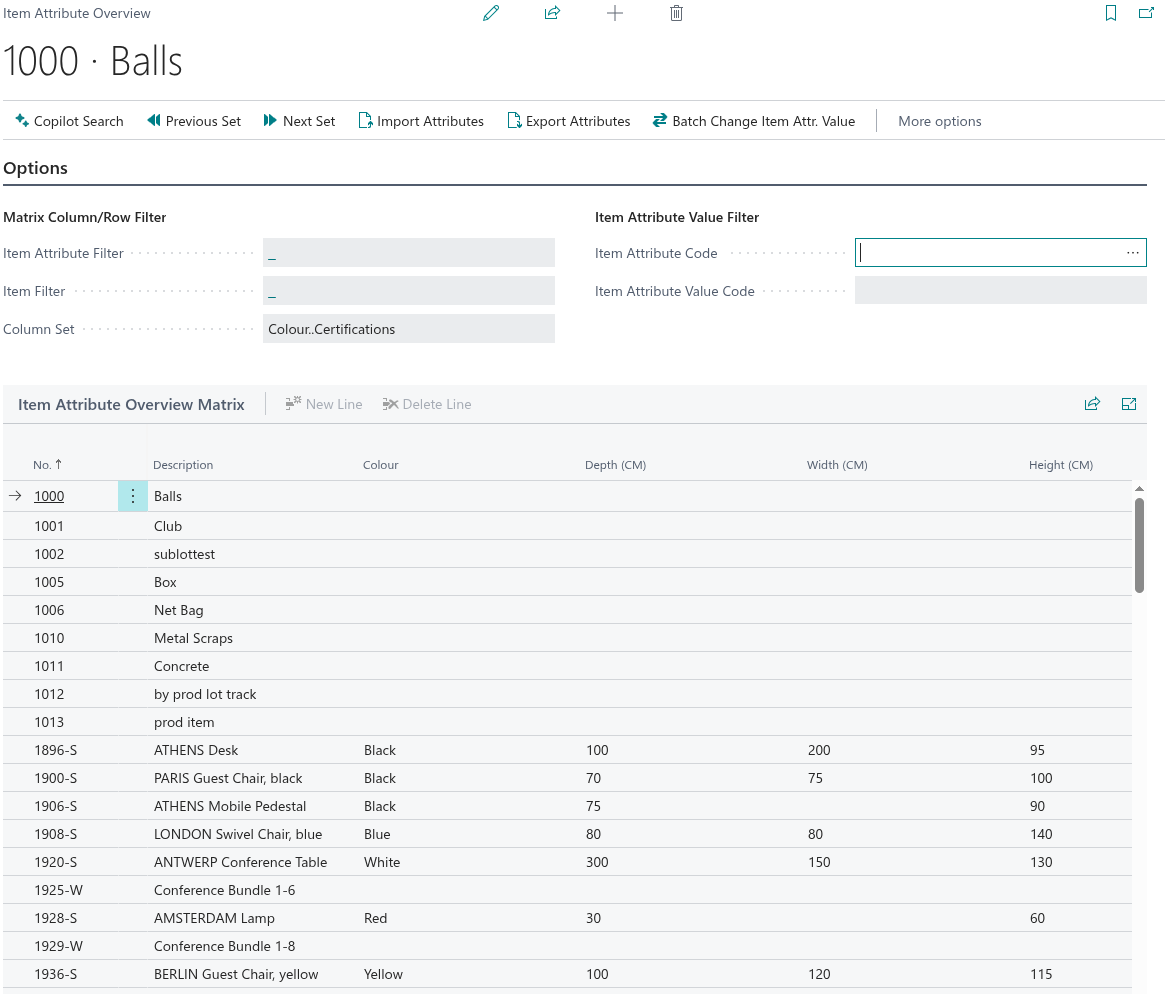
Export Item Attributes
The Export process creates an Excel file that you can use to edit Item Attribute Values for Items in your system.
Simply select Export Attributes from the menu bar and the system will automatically generate the file based on the data currently visible on the "Item Attribute Overview" screen. If you want to limit the Items included in the export, apply filters before selecting Export Attributes. The export will then only include data that meets those filters.
The view supports up to 40 attributes per page, and all visible attributes will be included in the export file.
The file is saved to your Downloads folder using the naming convention "ItemAttributes" followed by an underscore and the date and time, for example ItemAttributes_010623 0900.xlsx.
Import Item Attributes
The Import process reads data from an Excel file that must follow the same structure as the file produced by the Export process.
The file must contain a header row with Item No. in Column A and Description in Column B, followed by any Item Attribute Name values you wish to import from Column C onwards.
It is recommended to use the Export Attributes option before importing, as this provides a correctly structured template that you can then amend as required.
Note: Only include Items and Attribute Names in your import file where you want to update Item Attribute Values.
The rows beneath the header should contain the Item No., Description, and the Attribute Values you want to create or update.
Select the Import Attributes menu option to begin the import. You will be prompted to select your file and, if applicable, the worksheet name. The details will be displayed for confirmation before the import proceeds.
If the details are correct, select OK to continue.
The system will update or create Item Attribute Values for each valid line in the file. It will not delete any existing data. A confirmation message will display the number of records successfully imported.
If any errors occur, the system will still process valid records but will also report the number of records that failed.
In addition, the Error Messages screen will open, listing the specific issues found for each invalid record. For example, the system may report that an Item does not exist on a particular line of the file.