Transfer orders in Clever Containers help you move stock between locations while keeping visibility of the container used for shipment. The transfer order pages include actions to create lines from container contents, review container tracking against each transfer line, and review posted container history after shipment.
What Is Included for Transfer Orders
The Containers app adds transfer-order functionality in the following areas:
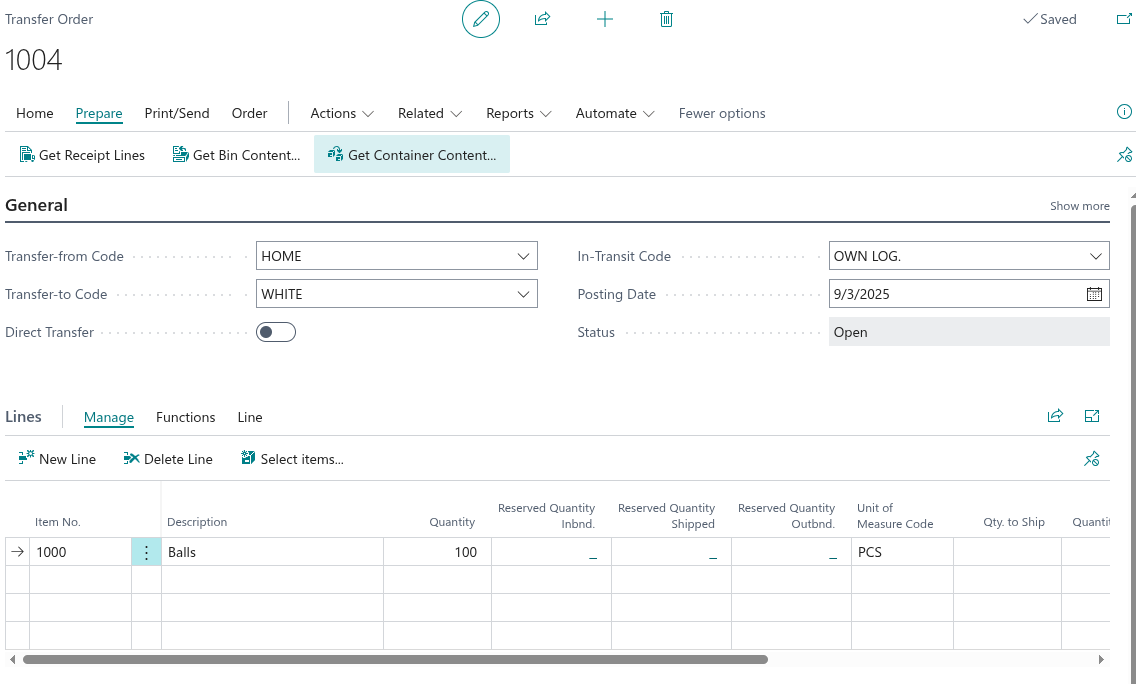
- The Get Container Content action on the “Transfer Order” screen.
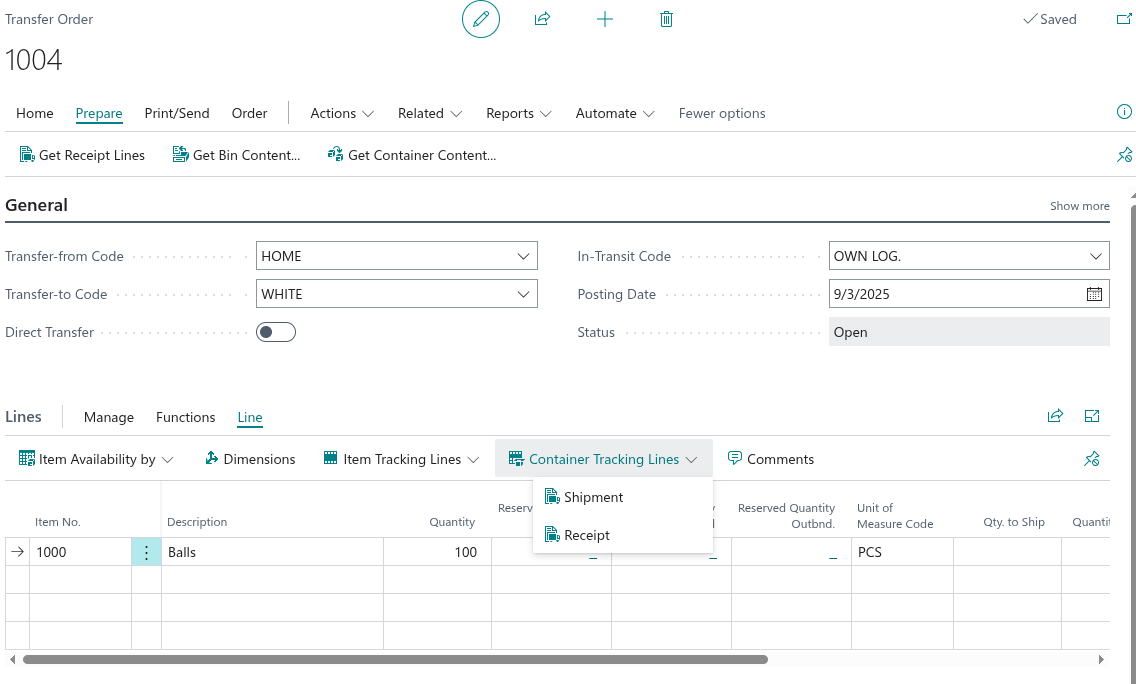
- The Container Tracking Lines actions for lines in the lines FastTab on the “Transfer Order” screen.
- The Container item availability view for lines in the lines FastTab on the “Transfer Order” screen.
- The Posted Container Tracking Lines action on the “Posted Transfer Shipment” screen.
Using Get Container Content
The Get Container Content action helps you create transfer lines from stock that is already stored in containers at the source location.
- The action only brings in container content for the transfer order Transfer-from Code.
- The system creates transfer lines from the selected container contents instead of requiring each line to be entered manually.
- The created lines include the item, variant, unit of measure, source bin, and quantity based on the available quantity in the selected container.
- If the item uses lot or serial tracking, the related item tracking is also carried onto the created transfer line.
Container Tracking Lines
Container tracking is managed from the transfer line by using the action Container Tracking Lines group.
- Select Shipment to review or maintain the open container tracking lines for the selected transfer line.
- Select Receipt to review posted container tracking history related to the transfer shipment for the selected transfer line.
Note: The Receipt action on the transfer line is a posted-history view for shipment-related container tracking. It is not a separate editable receipt-entry page.
Typical Transfer Workflow
A common transfer-order process with containers is as follows:
- Create the transfer order and enter the destination details.
- Use Get Container Content if you want to create transfer lines from existing source containers.
- Review the transfer lines and quantities.
- If warehouse picks are used, assign the shipment Container No. during warehouse activity processing.
- Review the transfer line through Shipment to confirm the container tracking lines.
- Post the transfer shipment.
- Review posted tracking history from the transfer line or from the “Posted Transfer Shipment” screen.
How Container Tracking Is Applied
Where warehouse picks are used, the app can create transfer container tracking during warehouse activity processing.
- The shipment Container No. can be assigned on the Place line of the warehouse activity when container tracking is required.
- When the warehouse activity is registered, the app creates the related container tracking entries for the transfer line.
- When the transfer shipment is posted, those entries become part of the posted container tracking history.
Validation During Posting
When container tracking is required for the transfer line, the app validates the tracking before shipment posting is allowed.
- The total tracked quantity must match the quantity being shipped.
- If the line also uses lot or serial tracking, the container tracking must also match the tracked quantity for each lot or serial combination.
- If the quantities do not match, shipment posting is stopped until the tracking is corrected.
Requirements
To use transfer-order container features successfully, the related setup must already be in place.
- The item must be set up to require container tracking where needed.
- The source bin must require container tracking for shipment-posting validation to apply.
- Container content must exist at the source location if you want to use Get Container Content.
- If warehouse picks are used, the correct shipment Container No. must be assigned before registration and posting.